
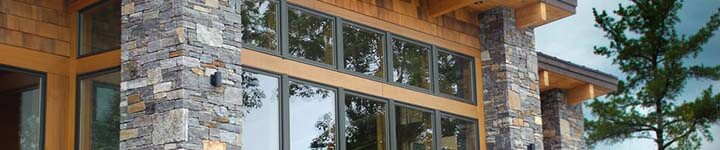
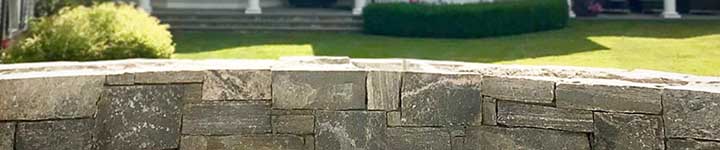
If you’re deciding between stone veneer styles, here’s the short version: ashlar is the most popular choice, with roughly rectangular pieces that create a clean, structured look across many architectural styles. Ledgestone brings bold horizontal lines and rugged texture for farmhouse and rustic settings. Squares and rectangles offer modern geometric precision. Mosaic creates an organic patchwork feel, while fieldstone captures the rounded, weathered character of old New England stone walls.
Below, we break down each style, including where it works best, relative cost considerations, and how to choose between natural thin stone veneer and manufactured stone veneer for your project.
Why stone veneer style matters as much as stone type
When people start a stone veneer project, they usually focus first on color and stone type: Vermont quartzite, granite, or fieldstone. But the pattern and cut of the stone often have a bigger visual impact than the stone species itself. The same Vermont granite can look completely different depending on whether it is cut into clean ashlar courses or stacked as rugged ledgestone.
Choosing the right style comes down to three things:
- The architectural style of your home, whether modern farmhouse, colonial, contemporary, or log cabin
- The application, such as an exterior facade, fireplace, foundation, accent wall, or outdoor kitchen
- Your maintenance and budget expectations
Let’s walk through the major veneer styles.
1. Ashlar veneer: the most popular choice for good reason
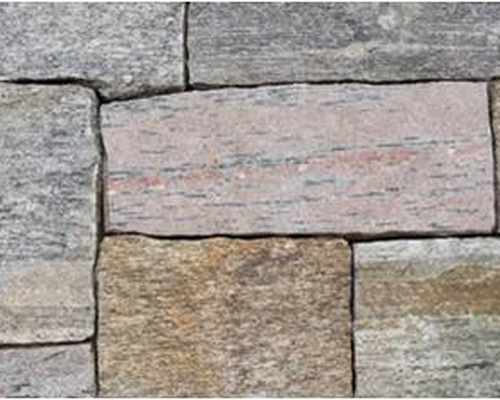
Ashlar is the most widely used natural stone veneer style, and the most versatile. It uses roughly rectangular pieces laid in level courses, similar in rhythm to brickwork. It comes in two main variations: coursed ashlar with uniform row heights, and random ashlar with varied row heights and the same tidy, rectangular character.
Green Mountain Veneer stocks a deep selection of ashlar, making it our strongest recommendation for most residential and commercial projects.
- Best for modern, transitional, and contemporary homes
- A strong fit for traditional colonial and cape-style homes
- Useful for commercial storefronts, entryways, and accent walls
- A refined choice for fireplace surrounds
Ashlar is the rare stone veneer style that reads as both timeless and current. It suits a Vermont farmhouse renovation just as naturally as a new construction home with clean lines and modern windows. Its structured appearance brings order to a facade without looking overdone, a balance that makes it a go-to style for architects, builders, and homeowners alike.
2. Squares and rectangles veneer: modern geometric precision
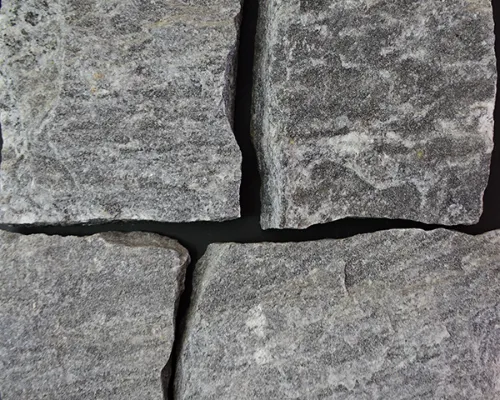
Squares and rectangles veneer uses stones cut to true geometric proportions, with square or rectangular faces in a range of sizes laid in deliberate, often symmetrical patterns. Think of it as ashlar’s more precise, geometry-forward cousin.
- Best for contemporary and minimalist architecture
- Works well for interior accent walls and feature surfaces
- A good choice for modern fireplace surrounds
- Useful for commercial and retail spaces seeking a bold, intentional look
As contemporary home design has shifted toward bold geometric forms and less ornamentation, squares and rectangles veneer has grown in popularity. It pairs especially well with concrete, steel, and large-format glass. When you want stone to feel designed rather than discovered, this is the style that delivers it.
3. Ledgestone veneer: bold, horizontal, rugged
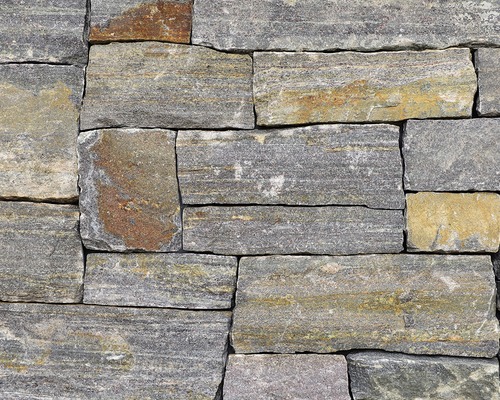
Ledgestone features long, flat stones stacked horizontally with minimal vertical joints, creating strong linear lines across a wall. It is a natural fit for rustic and farmhouse aesthetics throughout Vermont and the broader Northeast.
- Best for farmhouse and rustic exteriors
- Works well on fireplace surrounds and chimneys
- A strong choice for foundation wraps on traditional New England homes
- Useful for outdoor structures and retaining walls
Ledgestone is the style most naturally associated with the rugged, handcrafted character of Vermont’s landscape. It pairs beautifully with wood siding, board-and-batten, and timber-frame construction, and it hides minor wall imperfections well, a practical advantage on older properties with less-than-perfect substrates.
4. Mosaic (fit stone) veneer: organic and irregular
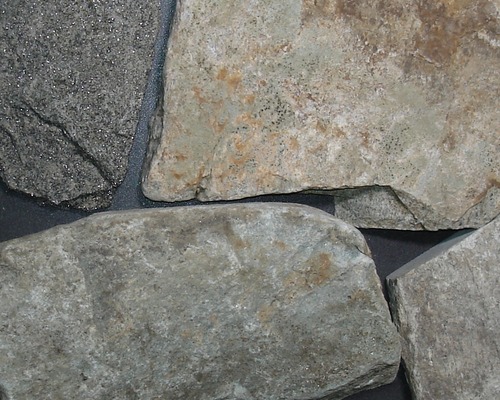
Mosaic veneer, sometimes called fit stone, uses irregularly shaped pieces fitted together like a puzzle with thin mortar joints. There is no dominant horizontal or vertical line, so the eye moves across the wall in an organic, flowing pattern unique to every installation.
- Best for accent walls and fireplace focal points
- A good fit for outdoor living spaces and patios
- Ideal for homeowners who want a one-of-a-kind, handcrafted look
Because every mosaic wall is inherently unique, it is often chosen for statement features rather than full exteriors. If you want a fireplace surround or garden wall that feels genuinely one of a kind, mosaic delivers that without compromise.
5. Fieldstone veneer: rounded and weathered
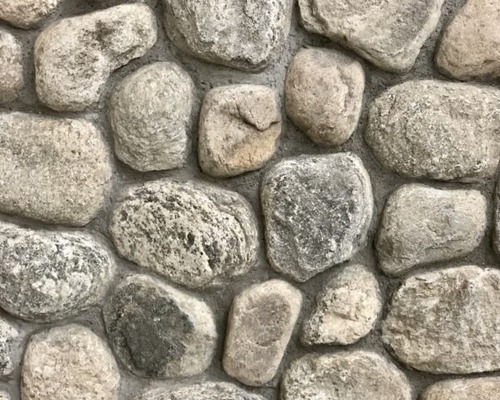
Fieldstone veneer mimics the rounded, naturally weathered stones gathered historically from New England fields and used to build the dry-laid stone walls that still define the Vermont countryside. Pieces are rounder and less angular than ledgestone or ashlar.
- Best for historic home restorations
- A natural fit for garden walls, mailbox posts, and landscape features
- Ideal for properties aiming for an authentic old Vermont aesthetic
Fieldstone is the style most associated with traditional New England identity. For historic restorations or landscape hardscaping that should feel as if it has always been there, fieldstone is the natural choice.
6. Dry stack veneer: no visible mortar
Dry stack veneer is installed to appear mortarless, with stones stacked tightly and concealed mortar joints producing a clean, seamless surface. It is a minimalist style that suits contemporary interiors particularly well.
- Best for modern minimalist designs
- A good choice for interior fireplace walls
- Pairs well with sleek materials such as metal, glass, or concrete
Comparing stone veneer styles at a glance
| Style | Look | Best uses |
|---|---|---|
| Ashlar | Structured, rectangular, refined | Versatile homes, facades, entries, fireplaces |
| Squares and rectangles | Geometric, crisp, modern | Contemporary walls, fireplaces, commercial spaces |
| Ledgestone | Long horizontal lines, rugged texture | Farmhouses, exteriors, chimneys, foundation wraps |
| Mosaic / fit stone | Irregular, organic, artisanal | Accent walls, fireplaces, patios, statement features |
| Fieldstone | Rounded, weathered, historic | Historic homes, garden walls, landscape features |
| Dry stack | Tight, mortarless-looking, minimalist | Modern fireplaces and interior feature walls |
Natural stone veneer vs. manufactured stone veneer
A question we hear often at Green Mountain Veneer is whether to use real Vermont stone or manufactured veneer.
Natural stone veneer is cut from quarried stone. It offers unmatched color variation and authenticity, and it tends to hold its look and perform structurally better over decades, particularly in Vermont’s demanding freeze-thaw climate. Manufactured veneer is lighter and sometimes less expensive upfront, but it can fade, chip, or look uniform over time in ways genuine natural stone does not.
For exterior applications throughout Vermont and the Northeast, natural stone veneer is the longer-term investment for ashlar, ledgestone, and fieldstone styles exposed to year-round weather.
How to choose the right style for your project
Ask yourself these three questions:
- What is the architectural style of the structure? Contemporary homes lean toward ashlar, squares and rectangles, or dry stack. Rustic and farmhouse properties lean toward ledgestone or fieldstone. Most homes fall somewhere in the middle, where ashlar earns its reputation as the most versatile option.
- Where is it going? Full exterior facades generally look best with a consistent ashlar or ledgestone pattern. Accent walls and fireplace surrounds can support bolder mosaic or geometric choices.
- How much pattern variation do you want? For a calm, repeating look, choose ashlar, squares and rectangles, or dry stack. For texture and visual movement, choose ledgestone, fieldstone, or mosaic.
Get expert guidance from Green Mountain Veneer
Every project is different, and photos online tell only part of the story. Stone color and texture shift with light, season, and surrounding materials. Green Mountain Veneer sources natural thin stone veneer from Northern New England and New York quarries and ships nationwide, with a deep in-stock selection across these styles.
Request samples or contact Green Mountain Veneer to talk through the right style for your next project.
Frequently asked questions
What is the most popular stone veneer style?
Ashlar is the most widely used natural stone veneer style because of its versatility. It suits traditional, transitional, and contemporary architecture equally well, making it a safe and stylish choice for most projects.
Is ashlar or ledgestone better for a fireplace?
Both work well. Ashlar suits modern and transitional fireplaces with a refined, tailored look. Ledgestone is the stronger choice for rustic or farmhouse rooms with wood beams and warm tones.
What are squares and rectangles veneer?
Squares and rectangles is a veneer style using stones cut to true geometric proportions, with square or rectangular faces in varied sizes laid in deliberate patterns. It is increasingly popular in contemporary and minimalist designs.
Does stone veneer style affect installation cost?
Yes. Styles requiring more cutting and fitting, such as mosaic and ashlar, generally take longer to install than ledgestone, which can influence labor costs more than material cost.
Can different stone veneer styles be mixed on one property?
Absolutely. Many homeowners use ashlar or ledgestone on the exterior and mosaic or dry stack on an interior fireplace for contrast. The key is coordinating stone colors across both applications so the pairing feels intentional.