
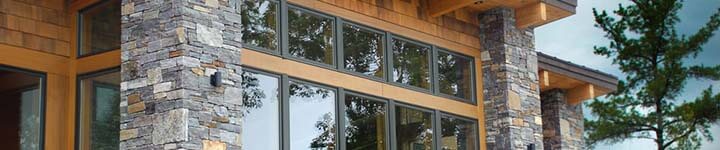
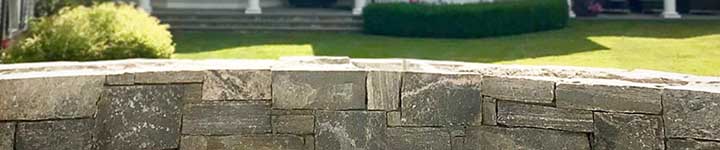
If you love the look of natural stone but do not want the weight, depth, or construction demands of traditional full-bed masonry, thin stone veneer may be the right fit for your project.
Thin stone veneer gives homeowners the authentic texture, color, and variation of real stone in a lighter, more versatile format. It can be used on home exteriors, fireplaces, chimneys, foundations, columns, outdoor kitchens, entryways, and many other architectural features.
At Green Mountain Veneer, we supply natural thin stone veneer for residential and commercial projects throughout Vermont, New England, and beyond.
This guide explains what thin stone veneer is, how it differs from full-bed stone, where it can be used, how it is installed, and what homeowners should consider before choosing a stone profile.
What Is Thin Stone Veneer?
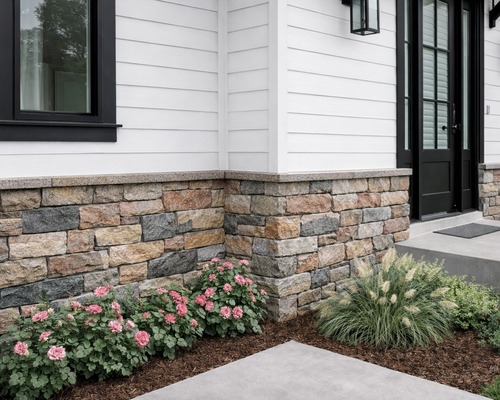
Thin stone veneer is real natural stone that has been cut to a reduced thickness for use as a decorative and architectural facing material.
Unlike traditional full-bed building stone, thin stone veneer is not intended to carry the structural load of a wall. Instead, it is attached to a properly prepared wall surface to create the appearance and character of traditional stone masonry.
The face of the stone remains natural, so homeowners still get the color variation, texture, mineral characteristics, and individuality of genuine stone.
The primary difference is thickness.
Because the stone is thinner, it weighs less and can often be installed in locations where full-depth masonry would be impractical.
Is Thin Stone Veneer Real Stone?
Yes.
Natural thin stone veneer is made from genuine stone, not concrete poured into molds.
That distinction matters.
Manufactured stone veneer is typically created from cement-based materials that are colored and shaped to imitate stone. Natural thin stone veneer is cut directly from quarried or field stone.
That means every piece has its own natural variation in:
- Color
- Texture
- Mineral patterns
- Shape
- Surface character
- Edges
No two natural stone veneer installations are exactly alike.
For homeowners who want an authentic stone appearance, natural thin stone veneer offers the character of real masonry stone in a more flexible format.
How Thick Is Thin Stone Veneer?
Natural thin stone veneer is generally cut to approximately ¾ to 1½ inches thick, although individual pieces can vary depending on the stone and profile.
The reduced depth makes it substantially lighter than traditional full-bed building stone.
That lighter weight is one of the biggest reasons thin stone veneer has become popular in both new construction and renovations.
Thin Stone Veneer vs. Full-Bed Stone
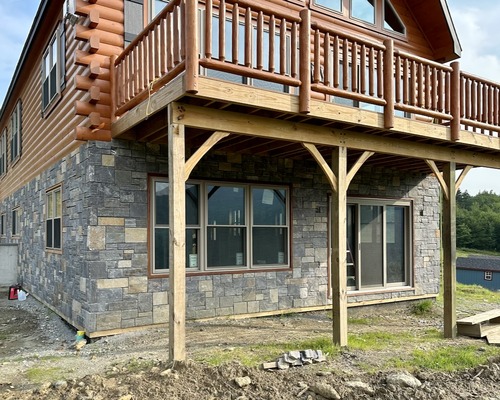
Both products are made from natural stone, but they are used differently.
Full-Bed Stone
Traditional full-bed building stone is thicker and heavier. It is commonly used in traditional masonry construction where the building or foundation has been designed to accommodate the stone’s depth and weight.
Thin Stone Veneer
Thin stone veneer is cut to reduce both weight and depth.
It is designed to be installed as a facing material rather than as a structural wall.
For homeowners, the key advantage is flexibility.
Thin veneer makes it possible to achieve the appearance of traditional stonework without requiring the same amount of structural support or wall depth.
What Are the Benefits of Natural Thin Stone Veneer?
There are several reasons homeowners, builders, architects, and masons choose thin stone veneer.
1. It Is Real Natural Stone
The biggest advantage is authenticity.
Thin stone veneer provides genuine stone texture and variation rather than a molded imitation.
2. It Weighs Less Than Full-Bed Stone
Because less material is used, thin veneer is much lighter than traditional building stone.
This can make installation possible on projects where full-depth masonry would be difficult or impractical.
3. It Takes Up Less Space
Thin stone veneer does not require the wall depth of traditional stone construction.
This is especially valuable during renovations or on projects where space is limited.
4. It Can Be Used Indoors and Outdoors
Natural thin stone veneer is extremely versatile.
It can be used on both interior and exterior architectural surfaces when installed correctly.
5. It Works With Many Architectural Styles
Depending on the stone profile, natural stone veneer can complement:
- Vermont farmhouses
- Timber-frame homes
- Lake houses
- Cabins
- Contemporary homes
- Mountain-modern homes
- Traditional New England homes
- Commercial buildings
The stone profile, mortar style, and surrounding materials all influence the finished appearance.
Where Can Thin Stone Veneer Be Used?
One of the biggest advantages of thin stone veneer is the number of places it can be installed.
Home Exteriors
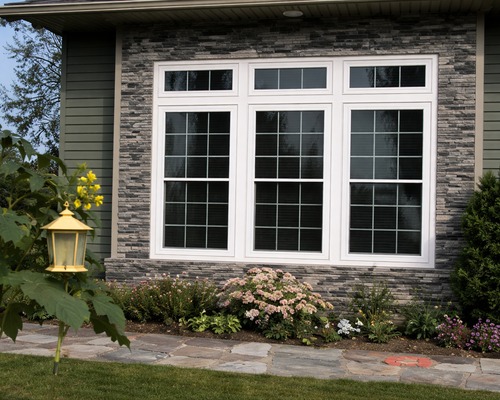
Natural stone veneer can be used across an entire façade or as an accent material.
Common exterior applications include:
- Foundations
- Front entrances
- Garage walls
- Gable accents
- Porch columns
- Chimneys
- Exterior accent walls
A small amount of stone can dramatically change the visual character of a home.
Fireplaces
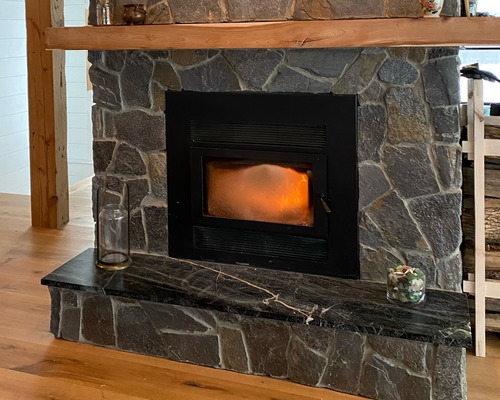
Fireplaces are one of the most popular applications for natural thin stone veneer.
Stone can create a focal point without requiring the depth associated with traditional full-bed masonry.
Depending on the profile and mortar style, a thin stone veneer fireplace can feel rustic, traditional, modern, or refined.
Chimneys
Thin natural stone veneer can also be used to create the appearance of a traditional masonry chimney.
This allows homeowners to coordinate the chimney with other stone elements on the home.
Outdoor Kitchens
Outdoor kitchens often use natural stone veneer around:
- Grill bases
- Cabinet structures
- Bars
- Islands
- Pizza ovens
- Fireplace surrounds
The stone helps an outdoor kitchen feel like a permanent architectural extension of the home.
Columns and Entryways
Stone veneer can be applied to porch columns, entrance walls, gate pillars, and other architectural features.
These smaller applications are a practical way to introduce natural stone without covering the entire building.
Interior Accent Walls
Natural thin stone veneer is also used indoors.
Popular interior applications include:
- Fireplace walls
- Living-room accent walls
- Entryways
- Wine rooms
- Stair walls
- Kitchen features
- Commercial interiors
Stone adds texture and visual depth that is difficult to replicate with manufactured finishes.
Can Thin Stone Veneer Be Installed on an Existing Home?
In many cases, yes.
Thin stone veneer can often be incorporated into renovation projects, but the existing wall assembly must be properly evaluated and prepared.
Installation requirements depend on factors such as:
- Existing siding or wall material
- Moisture management
- Structural condition
- Building code requirements
- Interior versus exterior use
Homeowners should work with a qualified mason or contractor to determine the correct wall preparation for their specific project.
What Can Thin Stone Veneer Be Installed Over?
The answer depends on the wall assembly and installation system.
Natural stone veneer may be installed over properly prepared masonry or framed wall systems, but exterior applications typically require careful attention to drainage, flashing, water management, and attachment.
The stone itself is only one part of a successful installation.
The wall behind it must also be designed to handle moisture and environmental exposure correctly.
For this reason, homeowners should avoid thinking of stone veneer as simply a decorative material that can be attached directly to any surface.
Proper preparation matters.
Does Thin Stone Veneer Look Different From Full Stone?
When installed well, it can be extremely difficult to distinguish thin natural stone veneer from traditional full-depth masonry.
Corner pieces are often used to wrap outside corners, helping create the appearance of full-depth stone.
The final look depends heavily on the skill of the mason.
Stone selection, joint width, mortar color, coursing, stone placement, and corner treatment all contribute to the finished result.
How Long Does Natural Thin Stone Veneer Last?
Natural stone is an exceptionally durable building material.
When the stone, wall system, mortar, flashing, and drainage are installed correctly, natural stone veneer can provide a long-lasting exterior or interior finish.
The longevity of the installation depends not only on the stone itself but also on workmanship and moisture management.
In climates like Vermont and northern New England, proper installation is especially important because exterior materials must withstand repeated freeze-and-thaw cycles.
Does Natural Stone Veneer Require Maintenance?
Generally, natural stone requires relatively little routine maintenance.
Homeowners may occasionally need to:
- Remove dirt or organic buildup
- Inspect mortar joints
- Check flashing and drainage areas
- Address damaged mortar if it develops over time
The specific maintenance requirements depend on where the stone is installed and how exposed it is to weather, water, vegetation, and other environmental conditions.
Can Thin Stone Veneer Handle Vermont Winters?
Natural stone itself is well suited to New England architecture, but cold-climate performance depends on the entire wall system.
In Vermont, New Hampshire, Maine, Massachusetts, and other northern climates, a successful exterior stone veneer installation should account for:
- Freeze-thaw cycles
- Water drainage
- Flashing
- Moisture management
- Proper mortar application
- Appropriate installation temperatures
A knowledgeable mason or contractor can help ensure the assembly is designed for the local climate.
What Styles of Thin Stone Veneer Are Available?
Natural thin stone veneer comes in a variety of shapes and profiles.
Some profiles emphasize long, horizontal lines, while others create a more irregular or traditional fieldstone appearance.
Common design directions include:
- Ashlar-style stone
- Ledgestone
- Fieldstone
- Mosaic-style stone
- Rectangular blends
- Irregular natural stone
For example, an ashlar stone veneer tends to create a more structured, linear appearance, while irregular stone profiles can feel more rustic and organic.
The best choice depends on the architecture of the home and the overall design you want to achieve.
What Materials Pair Well With Natural Stone Veneer?
Natural stone works particularly well with other materials commonly used throughout New England.
Wood
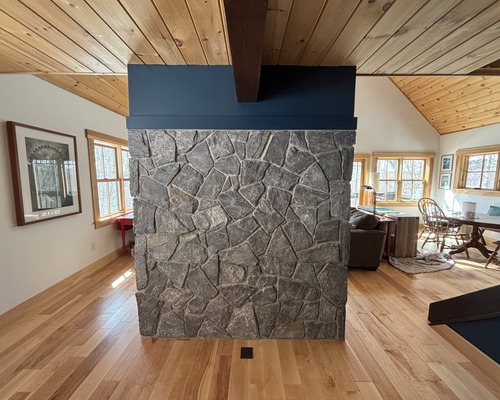
Stone and wood create a strong natural combination.
Thin stone veneer pairs beautifully with:
- Timber framing
- Cedar
- Board-and-batten siding
- Wood siding
- Exposed beams
- Reclaimed wood
Metal
Standing-seam metal roofing, black windows, steel details, and natural stone are frequently used together in mountain-modern and contemporary homes.
Neutral Siding
White, cream, gray, and other neutral siding colors allow the natural variation in stone to become a focal point.
Glass
Large windows paired with natural stone create contrast between light, open surfaces and heavier natural materials.
This combination is especially effective on lake homes, mountain homes, and contemporary residences.
How Do You Choose the Right Thin Stone Veneer?
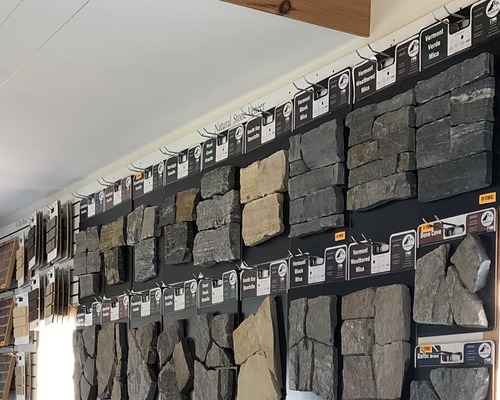
Choosing natural stone involves more than selecting your favorite color.
Homeowners should consider:
- Stone profile
- Stone size
- Color variation
- Texture
- Mortar color
- Joint width
- Roof color
- Siding color
- Window color
- Wood tones
- Surrounding landscape
Whenever possible, look at completed installations rather than choosing entirely from a small individual sample.
Stone changes dramatically when it is installed across a larger wall.
Why Mortar Color Matters
Mortar can significantly change the appearance of a natural stone veneer installation.
A light mortar may emphasize individual stones differently than a darker mortar.
Joint width also matters.
Tighter joints may produce a more contemporary appearance, while wider or more visible mortar joints can create a traditional masonry look.
Homeowners should consider the stone and mortar together rather than treating them as separate decisions.
Is Thin Stone Veneer More Affordable Than Full-Bed Stone?
Project costs vary based on the stone selected, installation conditions, labor, wall preparation, project size, location, and complexity.
Thin stone veneer can reduce some of the structural and material challenges associated with full-depth masonry, but homeowners should compare the complete installed project rather than focusing on stone price alone.
A qualified mason or contractor can provide a more accurate estimate based on the specific building.
Is Thin Stone Veneer Right for Your Home?
Thin stone veneer may be a strong option if you want:
- The appearance of genuine natural stone
- Less weight than traditional full-bed masonry
- A thinner wall profile
- Flexible interior and exterior applications
- A material that works with both traditional and contemporary architecture
- Natural variation rather than manufactured repetition
The right stone ultimately depends on your home, project location, architectural style, and surrounding materials.
Natural Thin Stone Veneer From Green Mountain Veneer
At Green Mountain Veneer, we provide natural thin stone veneer for homeowners, builders, architects, designers, and masons looking to incorporate authentic stone into their projects.
From Vermont farmhouses and timber-frame homes to modern residences, fireplaces, outdoor kitchens, commercial buildings, and landscape features, natural stone can create a lasting connection between a building and its surroundings.
If you are planning a stone project, explore Green Mountain Veneer’s available stone profiles and completed projects to see how different colors, textures, shapes, and installation styles come together.
The right stone does more than cover a wall.
It becomes part of the architecture.
Frequently Asked Questions About Thin Stone Veneer
What is thin stone veneer?
Thin stone veneer is natural stone that has been cut to a reduced thickness so it can be installed as an architectural facing material rather than as a structural stone wall.
Is thin stone veneer made from real stone?
Natural thin stone veneer is made from genuine stone that has been cut thinner for installation. It is different from manufactured stone veneer, which is typically made from molded cement-based materials.
Where can thin stone veneer be used?
Thin stone veneer can be used on fireplaces, chimneys, exterior walls, foundations, entryways, columns, outdoor kitchens, accent walls, and many other interior and exterior surfaces.
Can thin stone veneer be used outdoors?
Yes. Natural thin stone veneer can be used on exterior applications when the wall system, moisture management, flashing, and installation are properly designed.
Can thin stone veneer be used in Vermont?
Yes. Natural stone veneer is commonly used throughout Vermont and New England. Proper cold-climate installation and moisture management are important because of freeze-thaw conditions.
Is thin stone veneer lighter than full-bed stone?
Yes. Thin stone veneer contains considerably less stone than traditional full-depth masonry, which reduces both its thickness and weight.
Does thin stone veneer look like real masonry?
Because natural thin stone veneer is genuine stone, a properly designed and installed project can closely resemble traditional full-depth stone masonry.
What is the difference between natural stone veneer and manufactured stone?
Natural stone veneer is cut from real stone. Manufactured stone is generally made from concrete or cement-based materials that are molded and colored to imitate natural stone.
What kind of homes look good with thin stone veneer?
Natural thin stone veneer works well with Vermont farmhouses, timber-frame homes, cabins, lake houses, mountain homes, contemporary houses, traditional New England homes, and commercial architecture.
Request a veneer quote or ask our team about your project.